

Being absent from your kindergarten classroom is stressful enough without wondering what your substitute is going to do all day. Between helping your sub understand the schedule, lessons, and daily routines, it can feel like a lot. And then there’s the part that can make you want to put off preparing kindergarten sub plans altogether. . . figuring out exactly what your substitute needs to know to run your classroom while you’re gone.
The good news is that great kindergarten sub plans don’t have to be complicated or stressful! Yes, really! They just need to give your substitute clear directions, meaningful activities, and enough classroom information to confidently lead the day. Whether you’re a new teacher creating your first emergency sub plans or you’ve been teaching for years and need to finally update your sub binder, this post is designed to make it simple and easy to know what to include.
Start With the Big Picture
Before you start printing worksheets or planning individual lessons, think about what your substitute needs to know from the moment they walk into your classroom. You can make this process much easier by thinking through the school day in order. For example:
- What happens when students arrive?
- What does your morning look like?
- What subjects do you teach?
- What are your routines?
- What happens at dismissal?
Once you have that big picture, you can work backward and prepare the materials your substitute will need for each part of the day.
This is also a good time to decide where you’ll keep everything. A sub binder, folder, or tub can hold your classroom information, lesson plans, student information, and extra activities in one place. That way, you’re not searching through your computer or desk for materials when you’re already feeling sick or need to leave quickly for an emergency.
Give Your Substitute Directions They Can Actually Follow
One of the biggest mistakes teachers make with sub plans is assuming the person reading them knows what they mean.
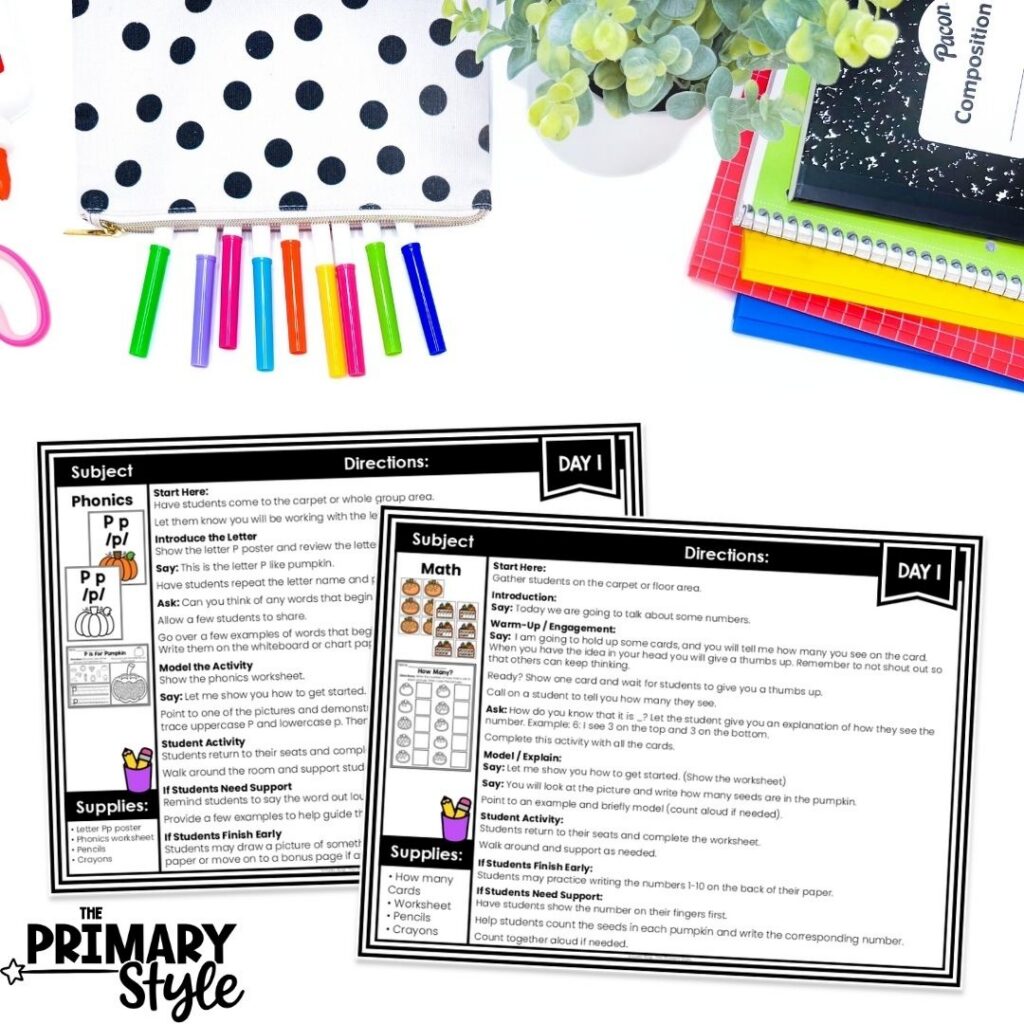
You might write something like. . . Math: Complete the addition worksheet.
To you, that may seem perfectly clear. But a substitute doesn’t know whether you normally introduce the skill first, whether students use manipulatives, how much help they should provide, or what to do when students finish.
Instead, give them a little more guidance, like this. . . Math: Begin by reviewing the examples at the top of the page. Read each problem aloud with students. Have students use counters or drawings to solve each problem. After students finish, have them check their work with a partner.
Keep in mind that you don’t need to write a novel for every lesson. Just include the information that answers the question, “What should I do next, and how?”
Teacher scripts can be especially helpful when designing kindergarten sub plans because they give substitutes actual language they can use when introducing a lesson. This is great for subs who might not have a ton of experience with primary learners.
Choose Activities That Keep Students Learning
Sub plans shouldn’t just be a collection of worksheets you pulled together at the last minute. Your students still need meaningful opportunities to practice the skills they’re learning in class. Not only does this make your sub’s day easier, but it also eliminates a “wasted day” of learning simply because you can’t be there.
When you’re creating your kindergarten sub plans, look at your regular schedule and make sure your substitute has something appropriate for each major subject area. For example, a typical day might include a phonics lesson, reading activity, writing practice, math, science, and social studies.
You don’t need to reinvent your entire curriculum for a substitute day. Instead, choose activities that reinforce skills your students are already familiar with. Focus on things you know they can be successful with for best results. That’s especially important early in the school year when kindergarteners are still learning how school works.
Use a Theme to Make Planning Easier
One of my favorite tricks for making it easier to organize kindergarten sub plans is to let a theme do some of the planning for you.
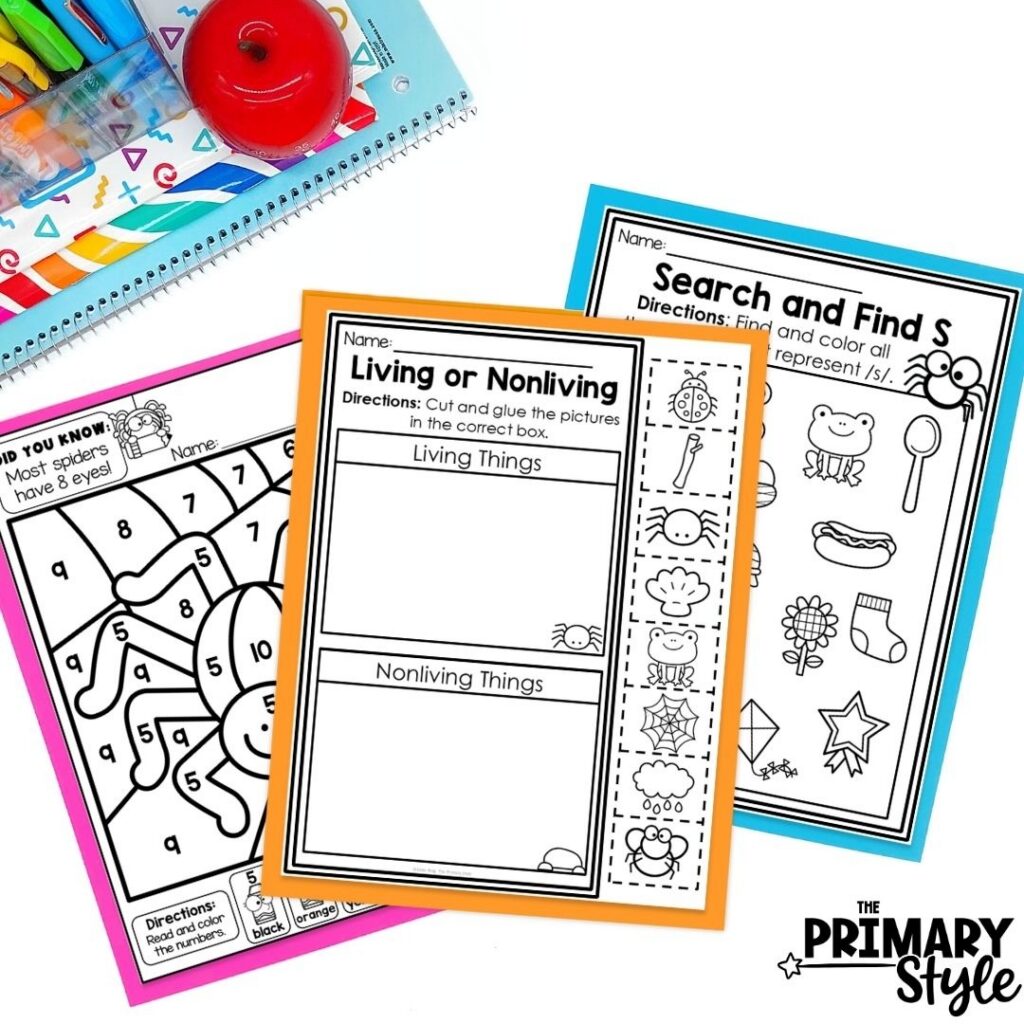
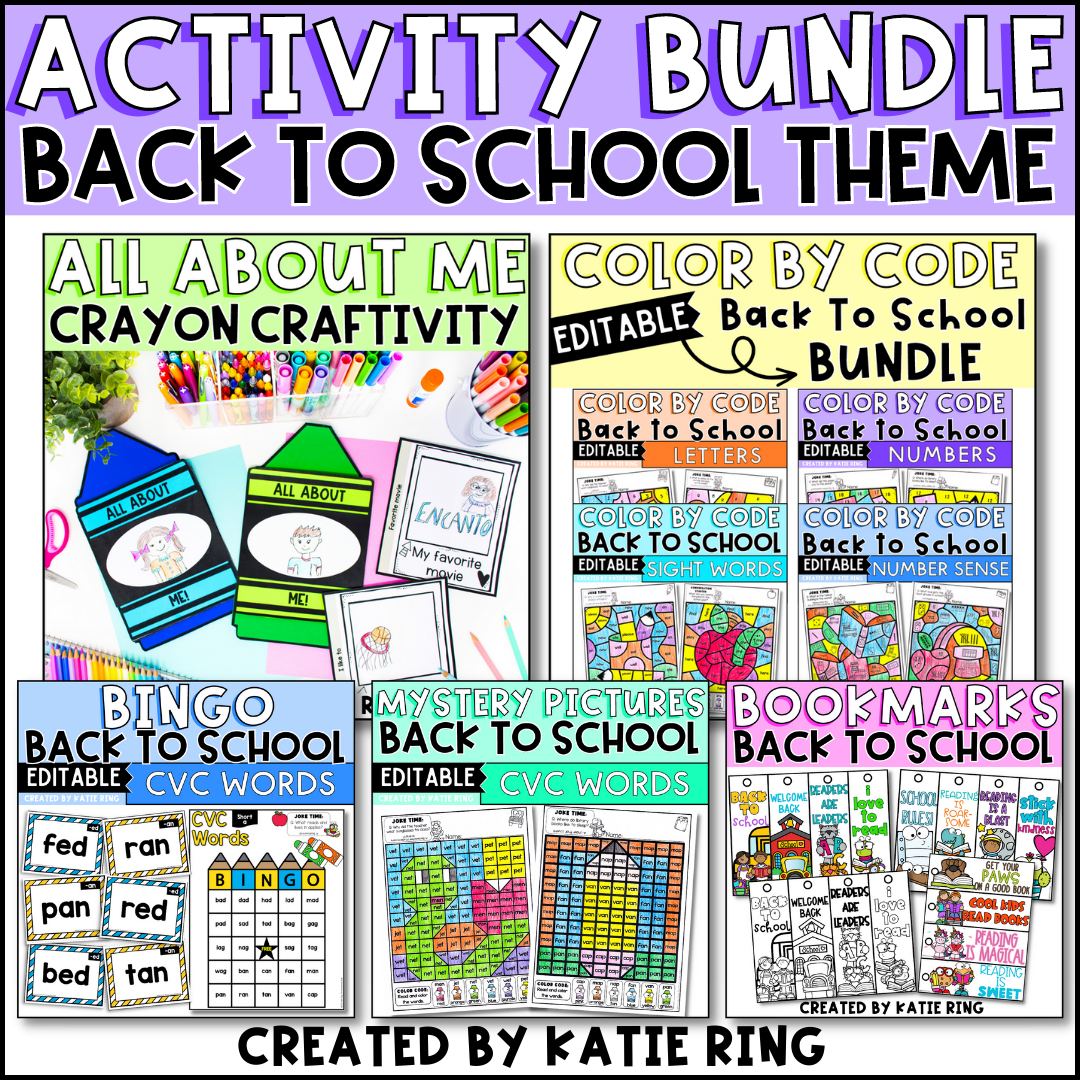
Kindergarten students love familiar themes like apples, pumpkins, spiders, turkeys, and community helpers. Not only does this mean better engagement, but it also reduces decision fatigue when choosing activities for each subject area. Fun themes like this work across your whole lesson plan and give a cohesive feel to the day.
For example, if you’re planning an apple-themed day, students might read an apple story during literacy, write about their favorite kind of apple, sort or count apples during math, and learn about the parts of an apple during science.
The activities don’t have to be complicated to be effective. The theme simply gives the day a common thread and makes the activities feel more connected. It can also make things easier for your substitute because they’re not introducing six completely unrelated topics throughout the day!
Plan for the Parts of the Day That Are Easy to Forget
When you’re planning lessons, it’s easy to focus on the big academic blocks and forget about the transitions in between. But those little pieces of the day matter a lot in kindergarten!
Your substitute will appreciate having a simple morning meeting activity ready to go instead of wondering how you normally start the day. The same is true at the end of the day. An end-of-day activity gives students a predictable way to wrap things up and helps your substitute know exactly how to finish the day.
When you’re assembling your plans, take a look at your daily schedule and ask yourself: “If I weren’t here, would my substitute know what to do during this part of the day?” If the answer is no, that’s a piece of information worth adding!
Always Have Extra Activities in Your Kindergarten Sub Plans
This is one of those things you don’t realize you need until you need it!
Maybe your class finishes an activity early, the schedule changes because of an assembly, or the lesson takes less time than expected. Or maybe your students are simply having one of those days.
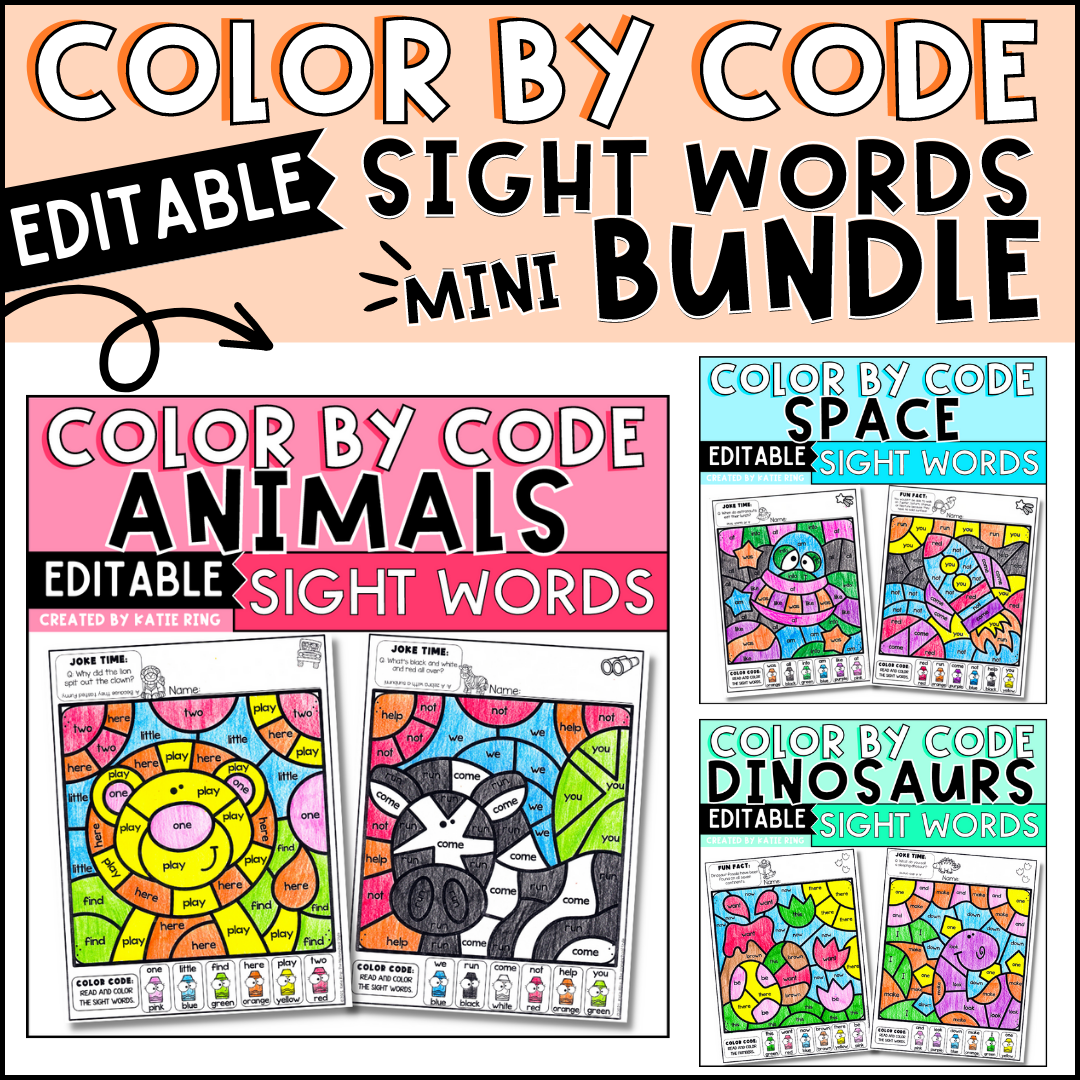
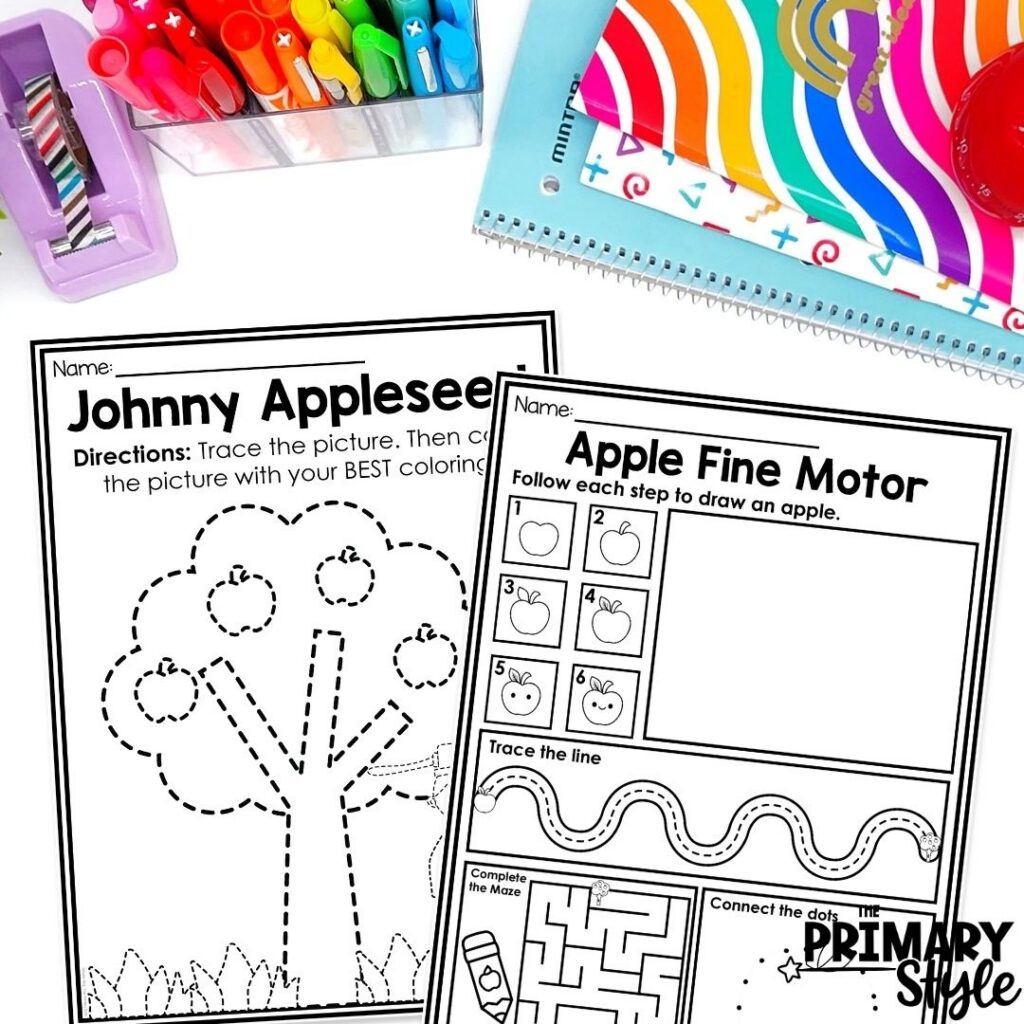
Your substitute shouldn’t have to come up with an activity on the spot. Include a few extra options that can be used for early finishers, centers, extra practice, or unexpected schedule changes. Even a handful of simple, no-prep activities can make your plans much more flexible for the substitute.
Be sure these activities are easy enough to complete so most of your students can do them independently. Introducing an “extra” worksheet that requires even more explanation or help than the main lesson can prove problematic for your substitute.
Don’t Forget the Classroom Information
Your lesson plans tell your substitute what to teach. Your sub binder should tell them how your classroom works.
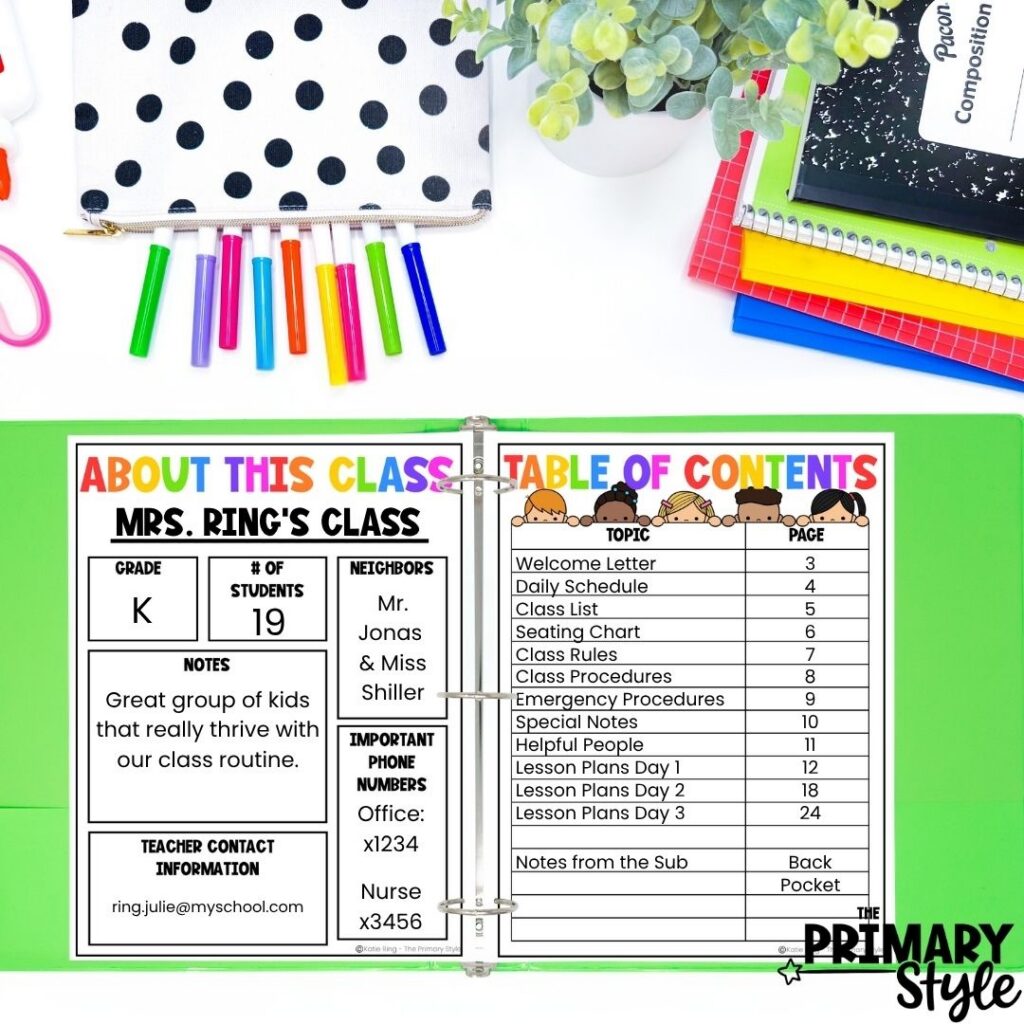
This is especially important for new teachers because you may not have thought about all of the little routines that you do automatically.
Start by writing down the basics:
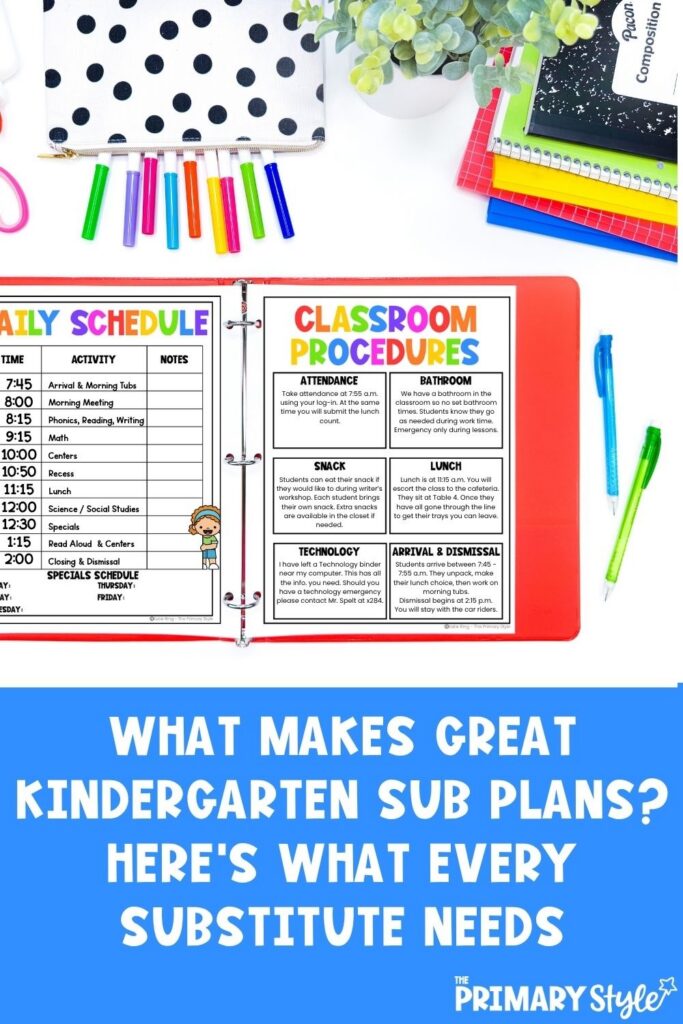
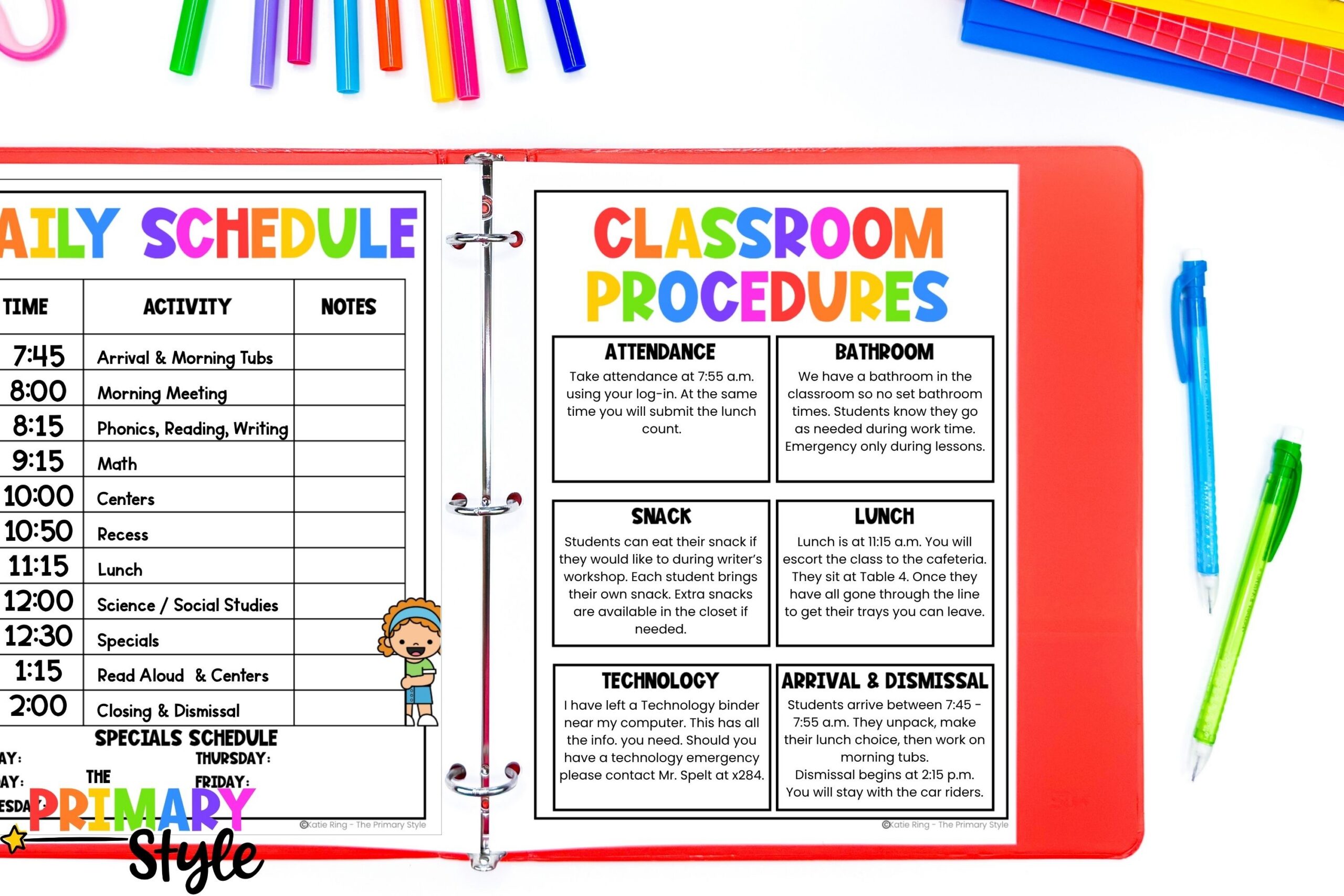
- Your daily schedule
- Classroom routines and procedures
- Student seating information
- Important classroom locations
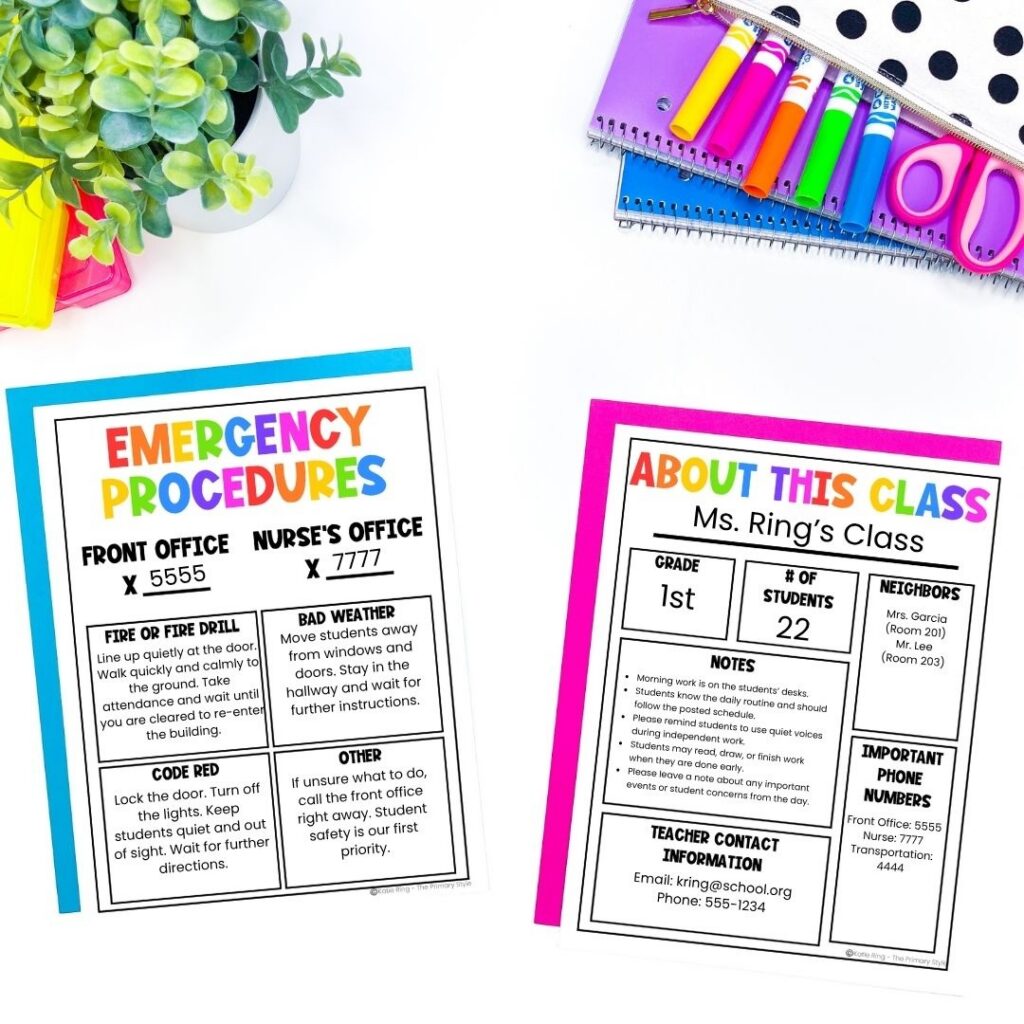
- Emergency information
- People your substitute can go to for help
- Notes about dismissal or other end-of-day routines
You can also include a “While You Were Away” page where your substitute can leave notes about the day. That way, when you return, you don’t have to piece together what happened from a handful of sticky notes.
A Simple Way to Build Your Kindergarten Sub Plans
If you’re starting from scratch, don’t try to create everything in one afternoon. Here’s 4 steps to follow to create your perfect sub plans:
- Start with your classroom information. Create your schedule, routines, procedures, and emergency information first.
- Create your daily lesson plans. Make sure each major subject has an activity and that your directions are clear enough for someone unfamiliar with your classroom.
- Add morning meeting procedures, end-of-day and dismissal routines, and plenty of backup activities.
- Put everything together in one easy-to-find location. You can even label sections in your binder so your substitute can quickly find what they need. The goal is to create a system that works even when you’re not there to explain it!
Want to Skip the From-Scratch Planning?
Now, if you’re reading all of this and thinking, “This is exactly what I need, but when am I supposed to find the time to make all of it?” I completely understand.
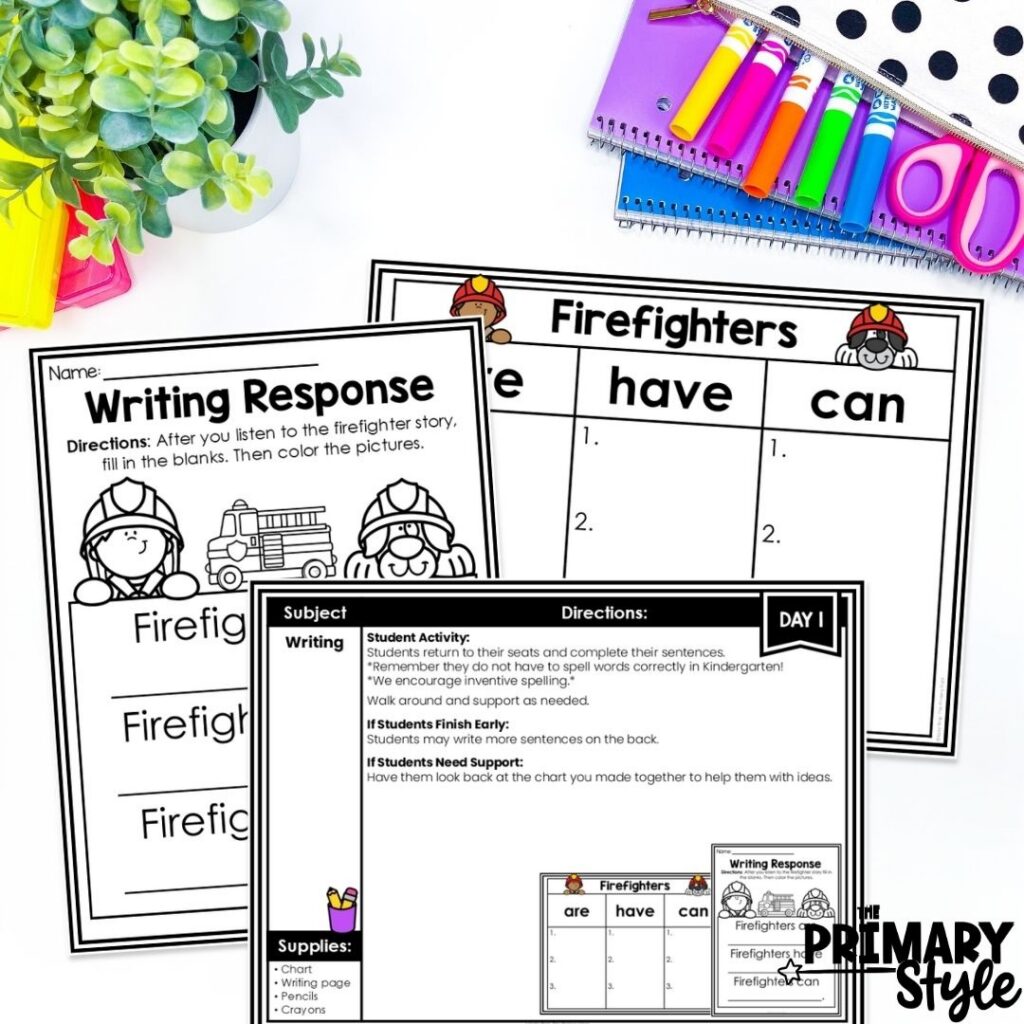
That’s why I created my Kindergarten Fall Sub Plans Growing Bundle!
Instead of starting with a blank page, you get complete, ready-to-use 3-day kindergarten sub plan packets. Each packet is built around engaging fall and beginning-of-the-year themes, including packets for community helpers, spiders, and apples, with more coming soon!
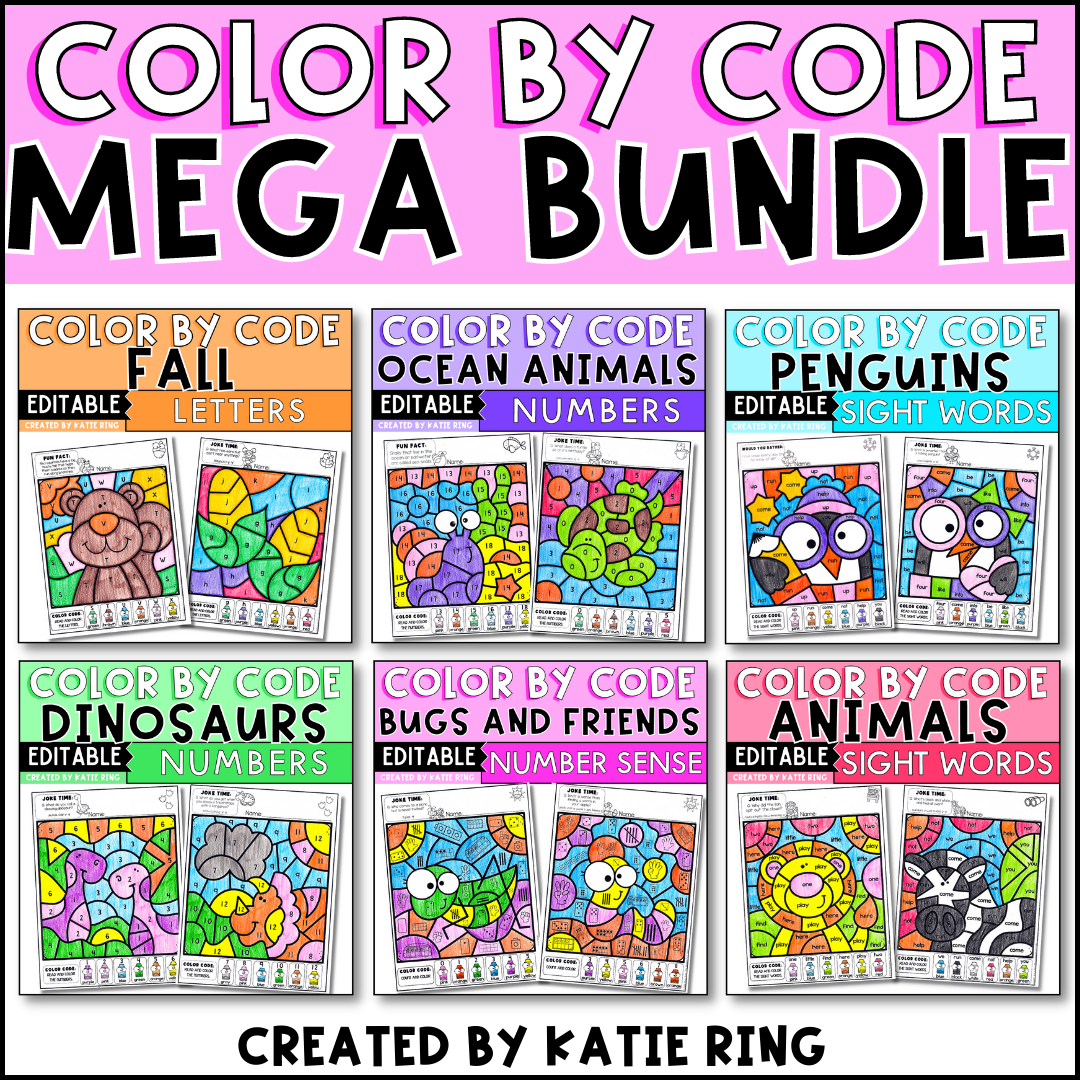
Each packet includes detailed plans for phonics, reading, writing, math, science, and social studies, along with a morning message and activity and an end-of-day closing activity so your substitute will have the whole day covered.
The lessons include step-by-step directions and substitute teacher scripts, so your substitute has guidance for what to say and do. You’ll also have extra activities ready for early finishers, centers, extra practice, or those unexpected schedule changes.
And Then There’s the Bonus Sub Binder!
The best part of this whole resource might be the BONUS sub binder. This helps you organize all of the classroom information your substitute needs in one place.
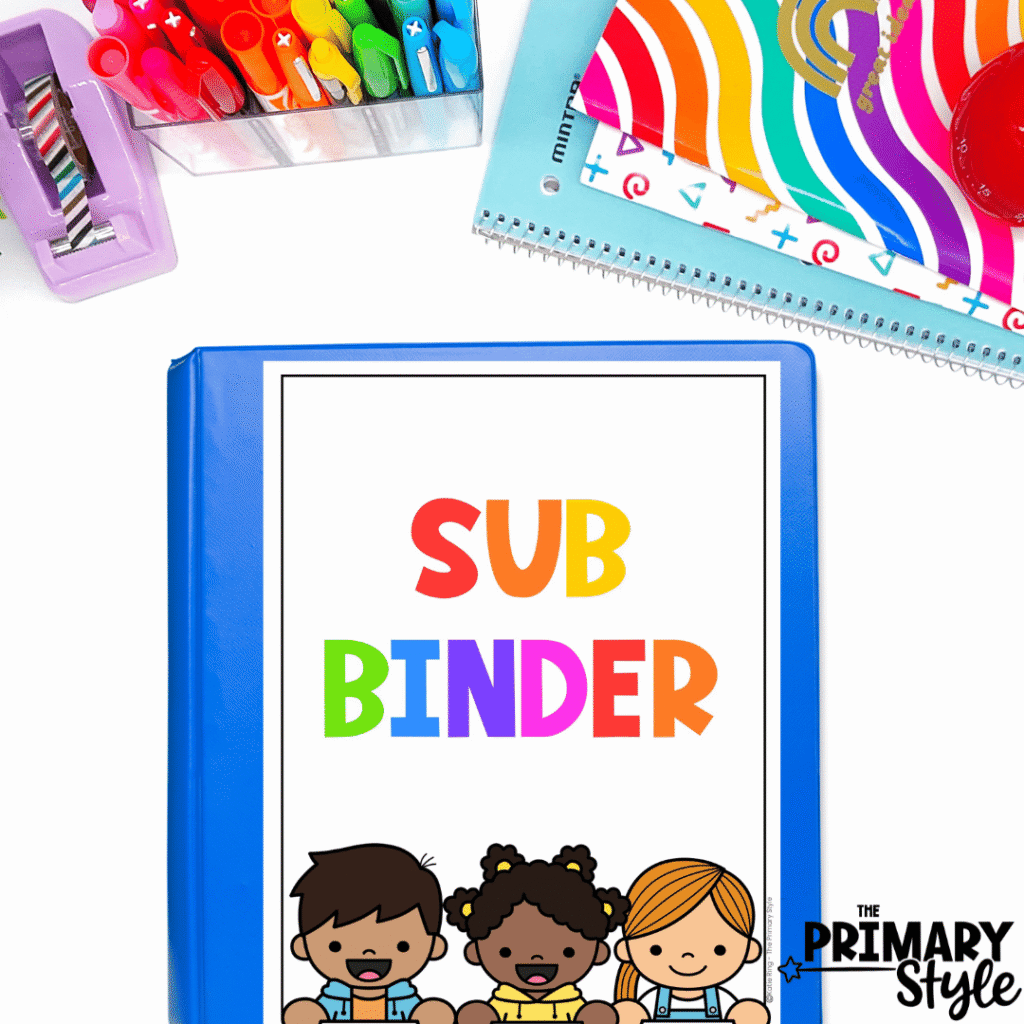
It includes pages for classroom procedures and routines, schedules, class lists, seating charts, emergency information, substitute reference pages, and more! There are multiple options included, so you can print and fill in the pages or customize the editable versions to fit your classroom.
Want to hear the best part? Because this is a growing bundle, you’ll receive future fall additions for free! This will allow you to ensure you ALWAYS have reliable and effective kindergarten sub plans ready to go! Getting this bundle now gives you the best price for all that is and will be included!
Grab the Kindergarten Sub Plans Bundle Today!
You can’t always predict when you’ll need a substitute. But you can make sure you’re prepared when that day comes.
When your substitute has clear directions, engaging kindergarten-appropriate activities, backup options, and the classroom information they need, the day becomes easier for everyone. Your substitute can walk in and think, “Okay, I’ve got this.” Your students can follow their normal routines and continue learning.
And most importantly, you can focus on getting better instead of worrying about what’s happening back in your classroom!
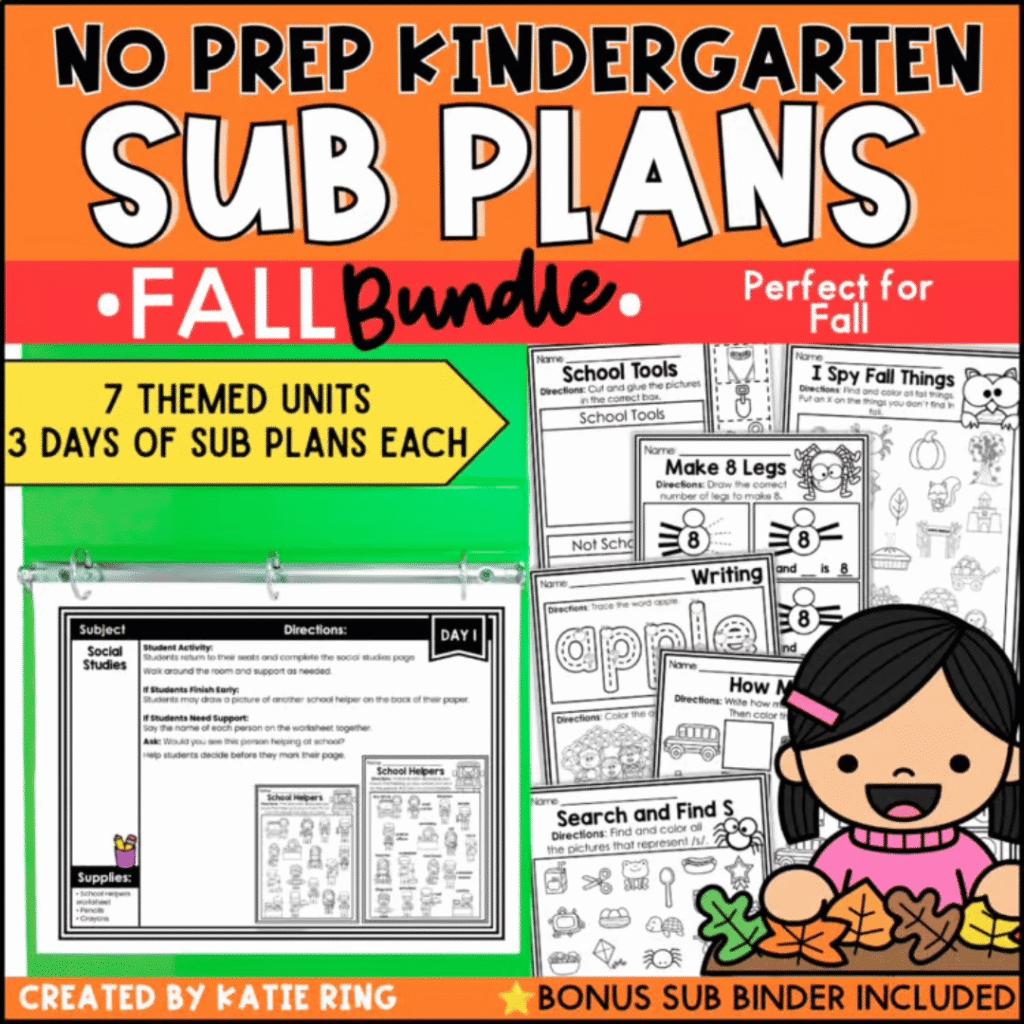
If you’re ready to get your emergency sub plans organized before you need them, take a look at the Kindergarten Fall Sub Plans Growing Bundle with Bonus Sub Binder right here! It can give you a ready-to-go starting point and save you from having to create every piece from scratch.
Read These Posts Next!
- Why Color-by-Code is Perfect for Differentiation in K-1
- No-Prep Fall Activities That Keep Kids Learning (and Teachers Sane)
- Crafting a September Morning Work Routine to Set the Tone in Kindergarten
Save This Guide to Kindergarten Sub Plans
There’s nothing worse than waking up sick and realizing you didn’t plan ahead for a sub. Pin this post on Pinterest so that you can come back to it and prepare the easy way!